

Frequently Asked Questions About Trip Cancellation & Interruption Insurance
Planning a vacation? Protect your travel investment with Trip Cancellation and Interruption Insurance. Here are five important questions to help you understand how it works and why timing matters.
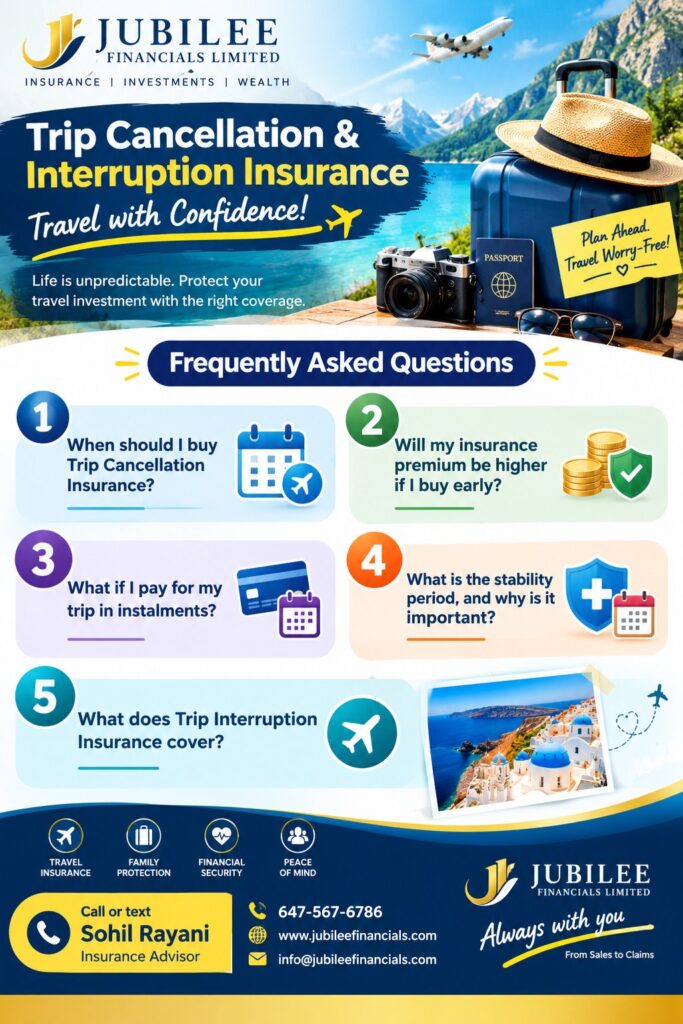
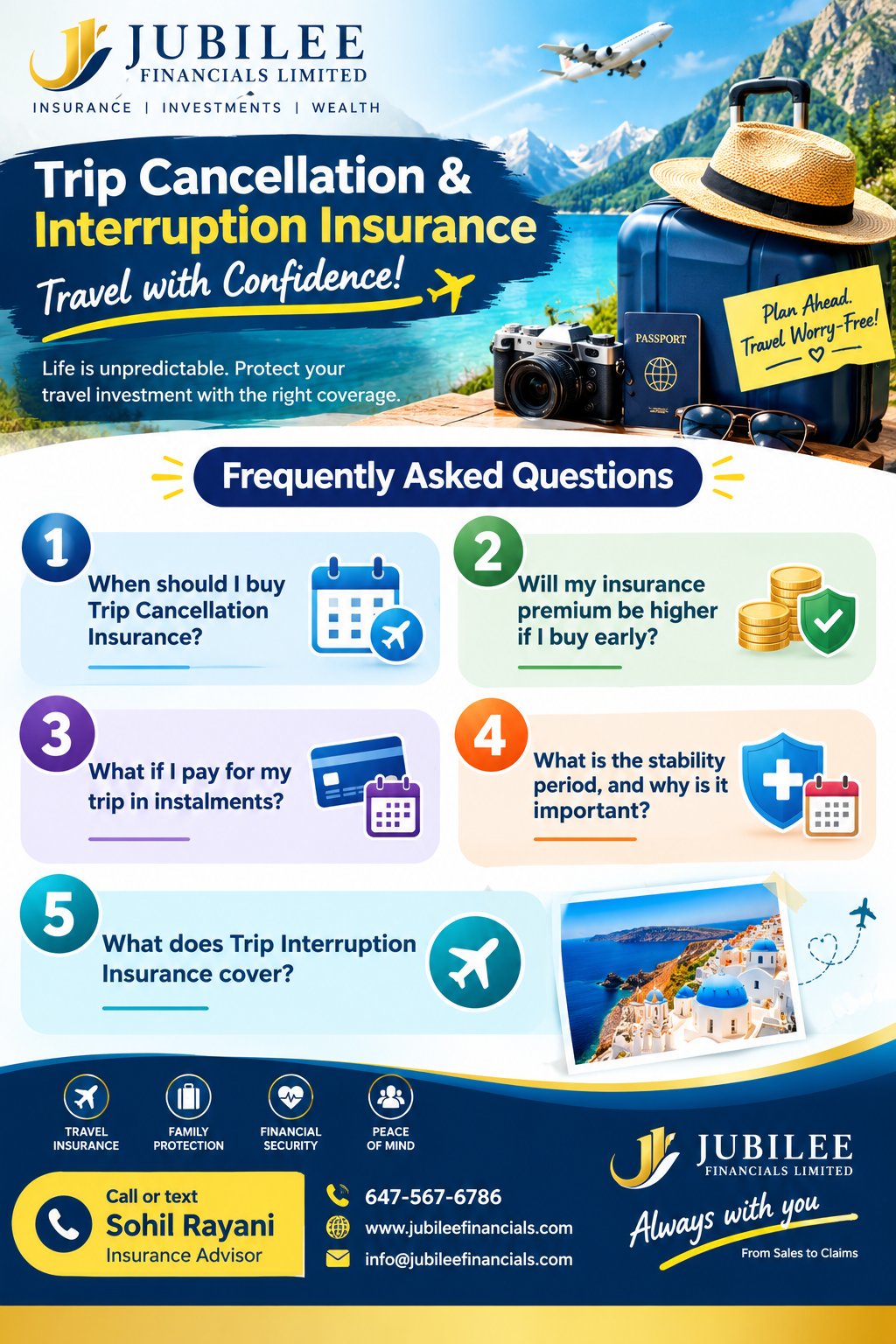
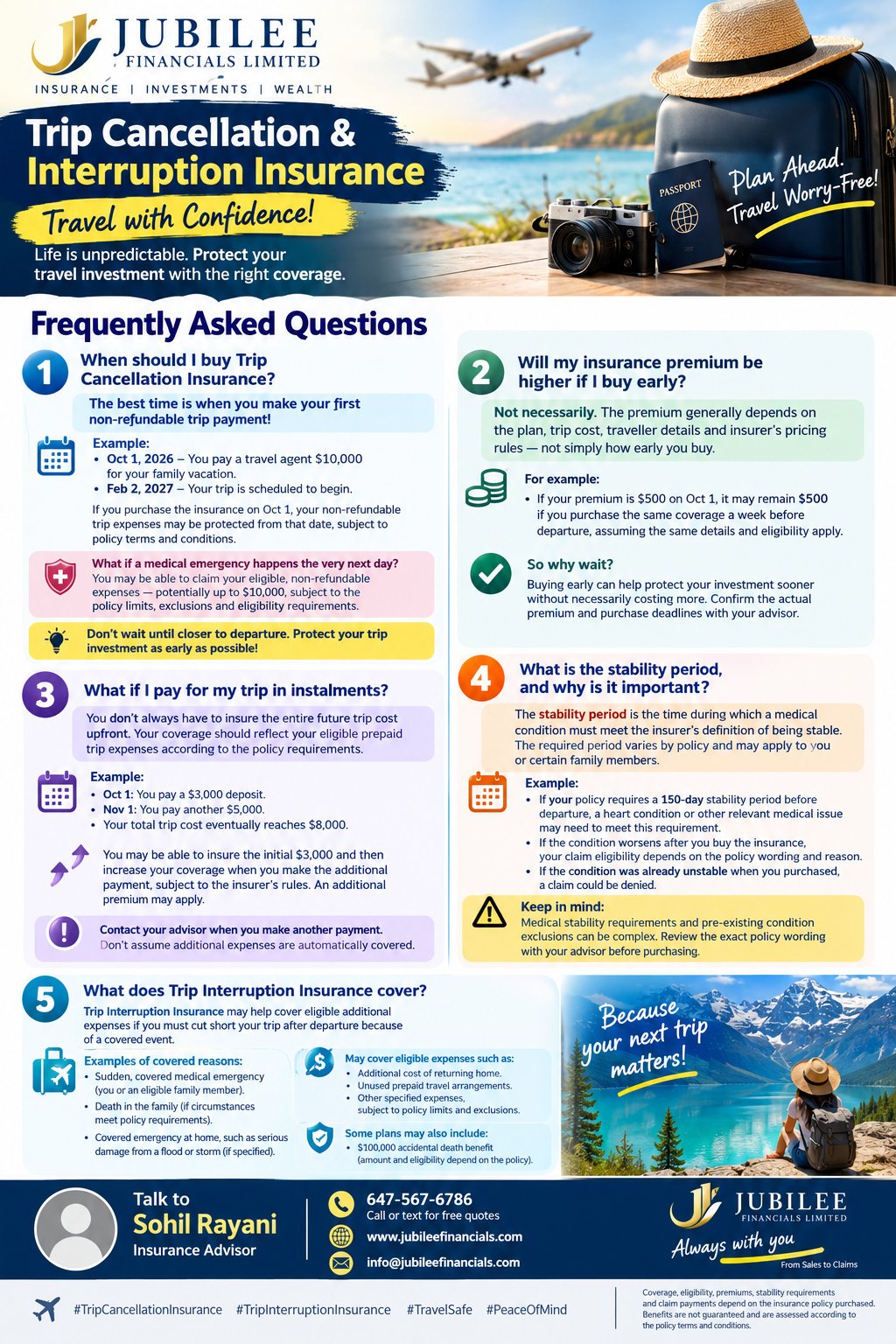
1. When should I buy Trip Cancellation Insurance?
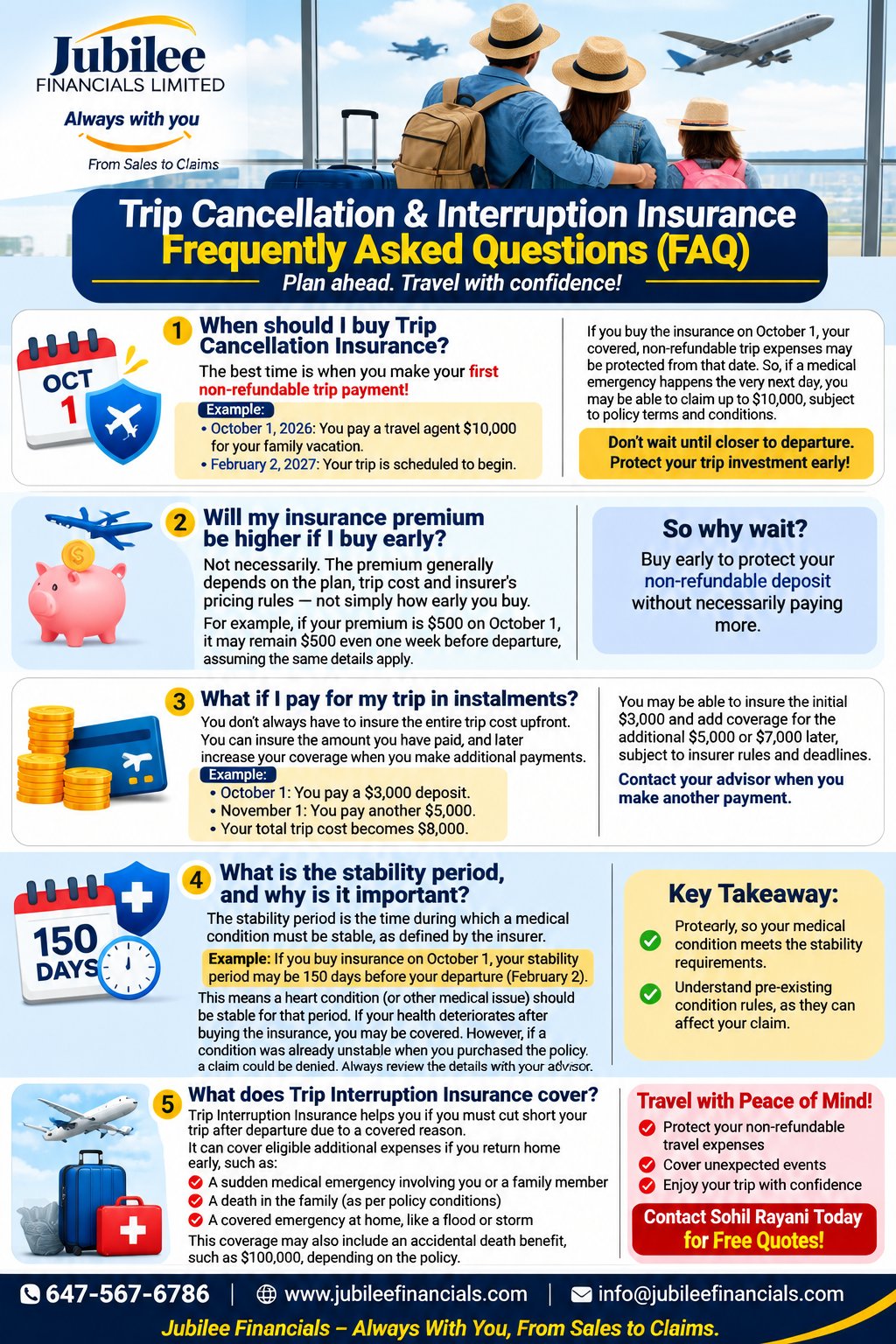
The best time to buy is when you make your first non-refundable trip payment!
Example:
- October 1, 2026: You pay a travel agent $10,000 for your family vacation.
- February 2, 2027: Your trip is scheduled to begin.
If you purchase eligible trip cancellation insurance on October 1, your covered, non-refundable trip expenses may be protected from that date, subject to the policy terms and conditions.
What if a medical emergency happens the very next day?
If you or an eligible insured family member experiences a covered medical emergency that forces you to cancel the trip, you may be able to claim your eligible, non-refundable expenses—potentially up to $10,000, subject to the policy limits, exclusions, and eligibility requirements.
Remember: Don’t wait until closer to departure. Protect your eligible trip investment as early as possible.
2. Will my insurance premium be higher if I buy early?
Not necessarily. The premium generally depends on the plan, trip cost, traveller details, and insurer’s pricing rules—not simply how early you buy.
For example, if your quoted premium is $500 on October 1, it may remain $500 if you purchase the same coverage a week before departure, assuming the same eligibility, trip details, and pricing rules apply.
So why wait and leave your non-refundable deposit exposed?
Purchasing early can help protect your investment sooner without necessarily costing more. Confirm the actual premium and purchase deadlines with your insurance advisor.
3. What if I pay for my trip in instalments?
You don’t always have to insure the entire future trip cost upfront. Your coverage should reflect your eligible prepaid trip expenses according to the policy requirements.
Example:
- October 1: You pay a $3,000 deposit.
- November 1: You pay another $5,000.
- Your total trip cost eventually reaches $8,000.
You may be able to insure the initial $3,000 and then increase your insured trip cost when you make the additional payment, subject to the insurer’s rules and deadlines. An additional premium may apply.
Important: Contact your advisor when you make another payment. Don’t assume additional expenses are automatically covered unless your policy provides for them.
4. What is the stability period, and why is it important?
The stability period refers to the time during which a medical condition must meet the insurer’s definition of being stable. The required period varies by policy and may apply to you or certain eligible family members, depending on the coverage.
Example:
Suppose your policy requires a 150-day stability period before departure.
If you buy coverage on October 1 for a trip departing February 2, a heart condition or other relevant medical issue may need to satisfy the policy’s stability requirements for the applicable period.
If a medical condition worsens after you purchase insurance, your eligibility for a claim will depend on the policy wording and the reason for cancellation. If the condition was already unstable when you purchased the policy, a claim could be denied.
Keep in mind: Medical stability requirements and pre-existing condition exclusions can be complex. They may differ between plans and between trip cancellation and emergency medical benefits. Always review the exact policy wording with your advisor before purchasing.
5. What does Trip Interruption Insurance cover?
Trip Interruption Insurance may help cover eligible additional expenses if you must cut short your trip after departure because of a covered event.
Examples of situations that may qualify include:
- A sudden, covered medical emergency involving you or an eligible family member.
- A death in the family, where the circumstances meet the policy requirements.
- A covered emergency at home, such as serious damage caused by a flood or storm, if specified in the policy.
Depending on the coverage, eligible expenses may include the additional cost of returning home, unused prepaid travel arrangements, or other specified expenses, subject to policy limits and exclusions.
Some plans may also include an accidental death benefit, such as $100,000, but the amount and eligibility depend on the specific policy.
Before you travel: Review the covered reasons, benefit limits, exclusions, and documentation requirements so you know what protection you have.
Protect Your Travel Investment Before You Go!
A trip is more than a vacation—it’s a financial investment. Don’t leave your non-refundable travel expenses exposed to unexpected events.
Contact Sohil Rayani, Insurance Advisor, at Jubilee Financials Limited.
Call or text: 647-567-6786
Website: www.jubileefinancials.com
Email: info@jubileefinancials.com
Jubilee Financials — Always With You, From Sales to Claims.
Coverage, eligibility, premiums, stability requirements, and claim payments depend on the insurance policy purchased. Benefits are not guaranteed, and claims are assessed according to the policy terms and conditions.